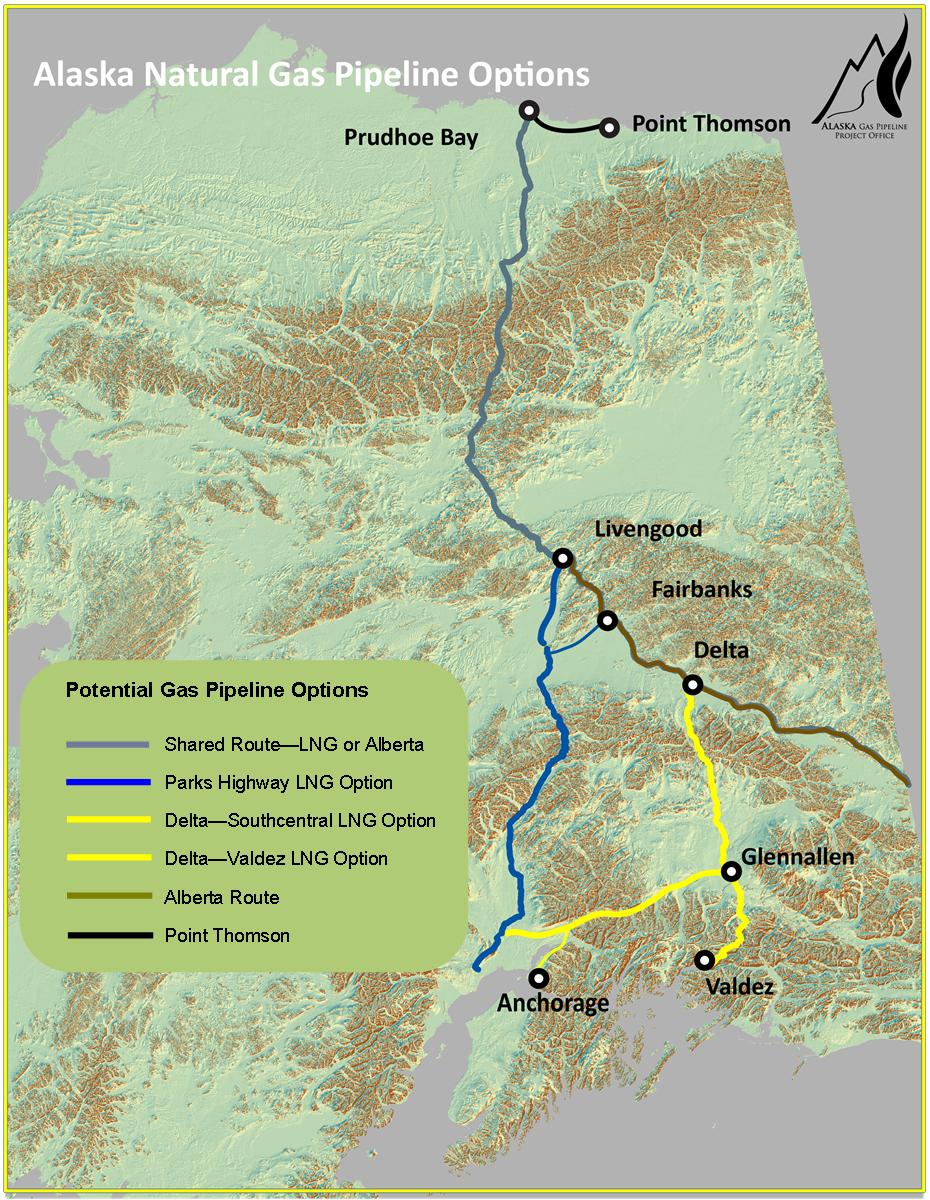
Alaska LNG pipeline under consideration
August 01, 2012
Trans-Canada and Exxon-Mobil are partners in the Alaska Pipeline Project(APP). The APP is soliciting interested parties to participate in an LNG pipeline from the North Slope to SE Alaska.
Since 2009, the Alaska Pipeline Project has conducted extensive environmental, technical and engineering studies. The project used the compiled study data as the basis for detailed draft Resource Reports required by the U.S. Federal Energy Regulatory Commission (FERC). In January 2012, the project filed draft Resource Reports 1-11 with FERC.s-Canada and Exxon-Mobil are partners in the Alaska Pipeline Project(APP). The APP is soliciting interested parties to participate in an LNG pipeline from the North Slope to SE Alaska.
From August 31 - September 14, the Alaska Pipeline Project will conduct a non-binding public solicitation of interest in securing capacity on a potential new pipeline system to transport Alaska’s North Slope gas to a liquefaction (LNG) terminal at a tidewater location in south-central Alaska. It also will consider an Alaska Highway pipeline option.
APP will conduct the solicitation of interest in accordance with the Alaska Gasline Inducement Act (AGIA), which requires TransCanada, as the AGIA Licensee, to assess market interest in a pipeline transportation system for Alaska North Slope gas every two years. All options being pursued under AGIA provide for a minimum of five delivery points for local natural gas connections in Alaska. The solicitation of interest is being conducted to identify parties potentially interested in making future capacity commitments on a pipeline system.
North American natural gas currently fetches $3 per mBtu. In Asia the price is $16 per mBtu or more. The demand out of Asia is very strong. Multiple groups are rushing to export LNG into the Asian market, including two projects out of Kitimat, B.C.
Commentary
The Alaska Highway gas pipeline is a non-starter, for the reason that prices are too low, with too much supply. The Asian market appears strong and growing, particularly in light of China’s massive growth and Japan’s desire to reduce its reliance on nuclear energy. The State of Alaska is strongly supportive of efforts to get its huge stranded natural gas reserves to market so LNG exports of North Slope gas would make a lot of sense.
Sources
- a)http://gasline.alaska.gov/
- b)http://www.thealaskapipelineproject.com/commercial
- c)http://www.economist.com/node/21558456